
Battery storage that works for the site, the grid and the community.
Oak Square Partners develops battery energy storage systems (BESS) across New England. We handle each project from start to finish: finding and securing the site, interconnection, permitting, financing and construction. We build two kinds of systems. Behind-the-meter systems lower energy costs for the business that hosts them. Front-of-the-meter systems serve the regional grid directly.
Behind-the-Meter Storage
For commercial, industrial and institutional facilities
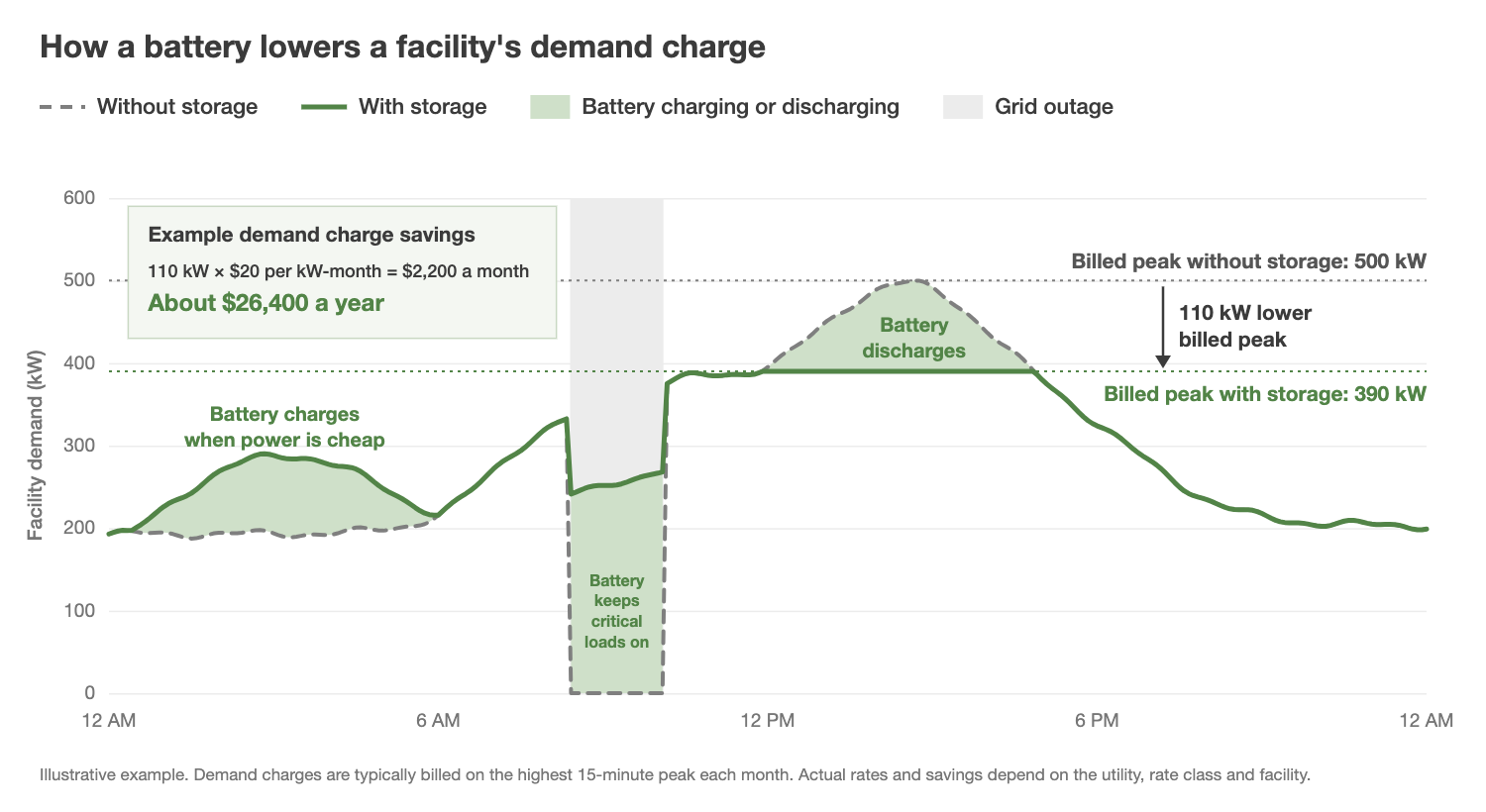
A behind-the-meter battery sits on your side of the utility meter. It charges when power is cheap and discharges during your facility's peak hours. That lowers demand charges and earns payments from utility programs.
- Lower demand charges: cuts your monthly peaks, which often make up a large share of a commercial electric bill.
- Utility demand response programs: your system can earn payments for discharging during peak grid events.
- Pairs with solar: stores rooftop or carport solar output and adds value under state solar incentive programs.
- Backup power: where designed for it, can keep critical loads running during an outage.
- Flexible ownership: we can own and operate the system and share the savings with you through an energy services agreement, or you can own it directly.
Front-of-the-Meter Storage
Grid-scale storage on leased land
A front-of-the-meter battery connects directly to the utility distribution or transmission system. It helps ISO New England balance supply and demand, stores excess renewable energy, and supplies power at peak times when the grid would otherwise lean on fossil-fuel peaker plants.
- For landowners: long-term lease income from a small, quiet footprint. A typical site needs as few as a few thousand square feet near existing utility lines.
- For the grid: capacity, flexibility and reliability services that support New England's shift to clean energy.
- For the community: new tax revenue with minimal demand on town services, plus help moving toward local and state climate goals.
Safety and Community First
Every OSP storage project uses certified equipment built to current national fire codes and standards, including NFPA 855, UL 9540 and UL 9540A.
How We Work
- Site evaluation: parcel screening, interconnection capacity and utility feasibility
- Agreements: lease, ESA or partnership terms that fit the site owner
- Interconnection and permitting: utility studies, local approvals and community engagement
- Financing and construction: experienced capital and EPC partners
- Operations: long-term monitoring, maintenance and decommissioning commitments
Partner With Us
Have land near utility lines, a facility with high energy costs, or capital to deploy in New England storage? Let's talk.